Thursday, 19 January 2017

Shrek Treasure Hunt (PS1) - i don't have a nose Video Review!

This week’s review focusses on a forgotten movie tie-in from my childhood. But did it really deserve to be forgotten? … Yes. Yes it did.


Yes, courtesy of TDK Mediactive and The Code Monkeys, I have in my hands the only PlayStation game released in conjunction with the original ‘Shrek’ (well, a year later anyway… Close enough), and boy, is it an ogre of a game! Muddled and mired in muggy controls and glitches galore, this may well have been extracted from Shrek’s swamp itself!


If you’re not already subscribed, remember to come back and check out this site for all your animation/gaming needs, and don’t forget to follow me on Twitter and like us on Facebook!

Twitter - @felixidhan

Facebook – http://facebook.com/idonthaveanose

Enjoy, guys!

Michael (and Felix)

Wednesday, 18 January 2017

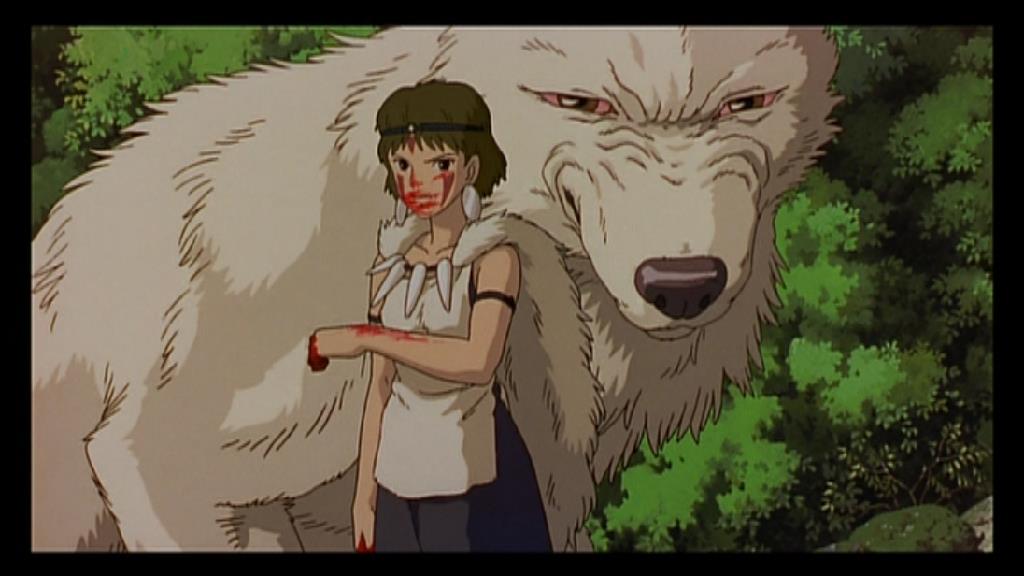
A God Among Movies: Revisiting 'Princess Mononoke' 20 Years On


Hayao Miyazaki's anime epic Princess Mononoke (meaning ‘spirit princess’) bears the distinction of being the most adult-oriented film of Studio Ghibli's output. Released in 1997, the film truly stands the test of time for its outstanding detail, complex story and characters, and its bravery in handling some fairly mature themes in the form of an animated movie. Now, twenty years later, we take a look back at what is quite possibly one of the greatest animated masterpieces of all time.

Written by Miyazaki, the film focusses on Ashitaka, a young prince who saves a village from a demon. After becoming embroiled with the demon in battle, Ashitaka's arm becomes cursed. Despite poisoning him and sealing his fate to die, the affliction also gives him superhuman strength (as evidenced by the fact that his arrow brutally decapitates and severs the limbs of Samurai soldiers). Ashitaka travels west to find a cure for his curse, and meets the people of Irontown, a mining town led by Lady Eboshi, who continually fights off the gods of the forest. The people are attacked by wolves, led by wolf god Moro, who are accompanied by the mysterious San (the titular princess), a girl raised by the wolves who harbours a hatred of humankind, who piques Ashitaka's interest. The pair identify each other as outcasts, and later form a bond.
As with many other anime films, this is certainly not for young audiences. Indeed, some of the imagery is often violent - visceral even - and other times it's pretty disturbing. But aside from the obvious graphic detail, the story is also fairly weighty, thematically. One of the most substantial themes is the ongoing conflict of the development of humankind and the preservation of nature - but unlike your average mainstream animated blockbuster there is no easy solution - all aspects of the theme are explored in all their ambiguous glory. In addition, there are very few animated films that depict war in such a graphic form - it certainly doesn't shy away from depicting bloody violence, and with the animation itself maintaining such lifelike qualities, it's hard not to wince on your initial viewing. There are few animated films out there that are so unashamedly brutal, especially ones not widely acknowledged to be strictly 'adult'.

But
Princess Mononoke's use of violent imagery is in no way gratuitous - it's executed purposefully in order to anchor its messages with greater, more impactful meaning, essentially to visually bridge the gap between two seemingly disparate factions – one of industrialisation and one of nature – by emphasising the homogeneous effects of destruction in both territories. There is no definitive 'good' or 'evil' party; both harbour the threat of regression in a sense, while simultaneously maintaining their own personal motives for growth and preservation of their kind. Morally, as stated before, there is no simple resolution - the only means of resolve is for one to appreciate the other's benefits and thereafter coexist, which I think you'll agree is pretty profound for an animated feature film.

The difficulty in perceiving good and bad is further provoked by the fact that Irontown is home to people who might be considered outcasts themselves by the rest of society - including lepers and ex-prostitutes. Lady Eboshi's label as an ‘antagonist’ is therefore challenged in the sense that she perceives herself as performing an act of public good. Likewise, the role of women is also an atypical depiction. On the one hand, the workers at the ironworks are women, which poses something of a stark contrast to your average Disney princess schlock. But then again, they are subordinates to the governor, who utilises their labour exploitatively. Even more confusingly still, the governor Eboshi happens to be a beautified female, implying perhaps the women of the film, generally, aren't as progressively diverse as they might seem. All the same, Eboshi’s character continues to defy the Hollywood stereotype of the subservient maiden or ‘damsel in distress’. The depiction of San as an aggressive warrior also condemns any preconceived notions of femininity that might accompany the initial viewing of an animated movie with a female lead.

Ultimately, this film is not one to be taken lightly. Its messages are mature and its tone is gritty - at times disturbingly so. It takes a fair amount of concentration to fully absorb and appreciate the morals Miyazaki was attempting to convey - particularly when much of the imagery is distractingly outlandish (in a good way). The animation is richly detailed, the story gloriously dark and complex, and Joe Hisaishi’s score is nothing less than epic. There’s little else to say besides that this is a must-see, and one that ought to be seen as a showcase of what the animated genre is truly capable of.

For more posts:
Follow me on Twitter - @felixidhan
Like us on Facebook - facebook.com/idonthaveanose

Monday, 16 January 2017

Cosgrove Hall: A Brief History

Founded in 1976 by Brian Cosgrove and Mark Hall, Cosgrove Hall Productions was a major producer and distributor of children’s television and animated series. The company was based in Manchester, and throughout the years, it expanded its versatility by covering a number of animation techniques, including hand-drawn cel animation and stop-motion. Gradually, the company was dissolved by ITV in 2009, but it has since been survived by CHF (Cosgrove Hall Fitzpatrick), a company which identifies itself as an extension of the original studio.

The Wind in The Willows, 1983
Amongst their most memorable productions are the original Noddy (1975) series, as well as its spin-off series Noddy’s Toyland Adventures (1992-2001), both of which were stop-motion animated. Another memorable series is Danger Mouse, which aired from 1981 to 1992. The traditionally animated series starred David Jason as the eponymous espionage expert, and Terry Scott as his bumbling bespectacled sidekick Penfold, the hapless hamster. Together they, along with the absent-minded Colonel K, fought most often against the notorious Baron Greenback, a villainous toad bent on attaining world domination. The series’ success also led to the incarnation of another David Jason-led series, Count Duckula, which ran from 1988 to 1993.
Danger Mouse (1981-1992)
'Toad', on display in Bristol, UK
In 1983, Cosgrove Hall produced a stop-motion animated film for Thames Television titled The Wind in the Willows, based on the book by Kenneth Grahame and once again starring David Jason as Toad. Subsequently, its success led to a spin-off television series which was broadcast from 1984 to 1987. Pictured to the right is the model of Toad at an exhibition in Bristol, UK.

In 1989, the company unveiled its only full-length traditionally animated movie for television, The BFG, based on the 1982 book by Roald Dahl. Written by John Hambley and directed by Brian Cosgrove, the film starred David Jason as the BFG (Big Friendly Giant) and Amanda Root as Sophie.

Later programmes produced by the company are not quite as memorable but remained of a high quality. Fifi and the Flowertots (produced by Chapman Entertainment) and Enjie Benjy (2002-2005) saw them return to the traditions of stop-motion animation. Since its dissolution and the passing of the baton to CHF, the company has resorted to using much more prevalent computer animation techniques, including Flash animation. But their programmes nonetheless remain popular amongst young audiences, including Pip Ahoy! (2014-), a series for pre-schoolers once again starring Cosgrove Hall stalwart David Jason.

Fifi and the Flowertots' 'Bumble' on display in Bristol, UK
For more posts,
Follow me on Twitter: @Felixidhan
Like us on Facebook: facebook.com/idonthaveanose

Thursday, 12 January 2017

Digging Up ‘Denver, the Last Dinosaur’ – The Lost Series

Denver, the Last Dinosaur is a somewhat obscure animated series created by Peter Keefe that ran from 1988 to 1990. Produced by World Events Productions, the show focussed on the adventures of Denver, a dinosaur who hatches in the 20th century, who is taken in by a group of teenage friends. Episodes often revolve around the gang’s attempts to protect Denver from the bad guys – Professor Funt (which sounds like an inappropriate portmanteau describing his general characteristics), rock concert promoter Morton Fizzback (yes, that is his actual name), and the big, burly Bertha Bird.


Unfortunately the show doesn’t really hold up today. Not only is it intolerably bland and unoriginal, it’s also irredeemably anchored in a cesspool of 1980s clichés, laden with your typical 80s synth soundtrack stings and often laughable faux-cool dialogue (which was clearly dictated by a far older generation of writers with absolutely no concept of coolness). And yes, it’s about as ‘80s’ as you can imagine, with the teens teaching Denver how to do ‘cool’ things such as skateboard. Luckily Denver can inexplicably talk (voiced by Pat Fraley), making it much easier for the gang to communicate with him.

The show, for its time, is not *bad* as such, but mediocre at best. The writing is slow at times and the characters, generally, are rather flat. The villains are your usual cookie-cutter baddies, and precisely why Morton Fizzback wants a dinosaur for his rock concert is beyond me. One can assume it’s because Denver can ‘rock out’ – or at least that’s what’s implied by the bizarre opening sequence which sees Denver sporting a pair of sunglasses and strumming a garish pink guitar. Yeah, this is the 80s, alright. Keeping in mind that it had some pretty hefty competition on TV at the time – such as DuckTales and Teenage Mutant Ninja Turtles – this show stood no chance and was cancelled after two seasons. Having seen a handful of episodes, I can tell you it’s a surprise it lasted that long. Episodes released on home video include the teens’ excursion with Denver to an archaeological dig, and Denver’s discovering his talent as a gourmet chef. It’s not the worst thing you’ll ever see, but you have to admit it hardly coincides with the ‘cool’ image they were going for, indicative of the show’s opening and infuriatingly catchy theme song. I mean, seriously, what were the writers thinking? There’s a talking dinosaur alive in the 1980s and what do they do? They have him become a chef. Really?! Maybe this is too ‘cool’ for me to appreciate…

As if the show couldn’t get any cooler, it was also recommended by the National Education Association. I’m not really too sure why; perhaps it was bland and inoffensive enough to meet their criteria – honestly it’s so generic and clean, you feel somehow ironically unclean after watching it. There’s certainly nothing hugely educational here, at least no more so than any other generic animated television series. There are little redeeming aspects of this series – the soundtrack is oftentimes unbearable, and often mixed so badly that it overpowers the voice acting. Speaking of which, there are some familiar voiceovers here, including the likes of Kath Soucie and Tress MacNeille. But despite these, the majority of voices are disturbingly out of place, with many of the male actors trying too hard to sound like your stereotypical goofy teenage Californian, with the long hair and high waist jeans to complement the overall ‘look’.

Despite the criticisms, it’s still worth a look, if only to observe one of the lesser, less durable animated series of the 80s. Unfortunately, however, it’s worthy of your attention more so as an example of how *not* to appeal to young audiences. No matter how ‘cool’ they tried to make the show, Denver was probably dated the moment it first aired – some might even call it prehistoric. But that pink guitar was pretty cool, right?


Then again, maybe not...

For more posts,
Follow me on Twitter: @Felixidhan
Like us on Facebook: facebook.com/idonthaveanose

Tuesday, 10 January 2017

A Bug's Life (PS1) - i don't have a nose Video Review!

Hello everyone! I'm excited to unveil the first video review of 2017, and the first in a series of retrospective animated movie tie-in videogame reviews. Hope you enjoy, feel free to comment, share and subscribe for more very soon!

Thanks!

Michael (and Felix)


Saturday, 7 January 2017

Forgotten Features - The Magic Sword: Quest for Camelot (1998)


It’s widely acknowledged that Warner Bros Animation is not held in as high regard as Disney, but the studio has, on the odd occasion, proven its capabilities with the likes of unexpected masterpieces as Brad Bird’s The Iron Giant (1999). Sadly, Quest for Camelot (also known as The Magic Sword: Quest for Camelot in the UK) doesn’t match up, and is instead representative of the tired formula popularised by your average Disney flick – only not executed nearly as effectively. It’s a shame because there are elements of Quest for Camelot that are actually quite admirable, but there are far too many flaws and obviously derivative aspects that see the film consistently mired in mediocrity.

The main focus of the film is Kayley (voiced by Jessalyn Gilsig), who, in typical Disney-princess-esque fashion, yearns to defy the societal norm and become a knight like her father Sir Lionel (Gabriel Byrne). After Sir Lionel is predictably killed within the first quarter of an hour by villain and fellow knight of The Round Table Ruber (voiced by Gary Oldman, and who could not look more villainous if he tried – how on earth he was knighted in the first place, I’ll never know), Ruber’s pet griffin retrieves the magic sword Excalibur from King Arthur (Pierce Brosnan), only to lose it in the forbidden enchanted forest. After Ruber lays siege to the village and creates an army of human/animal/weapon hybrid warriors, Kayley sets out to find the sword. Along the way she meets Garrett (Cary Elwes), a blind hermit who knows his way around the enchanted forest better than anybody else… somehow, and Devon and Cornwall, a two-headed dragon voiced by Eric Idle and Don Rickles respectively, who serve no purpose other than to fill the clichéd role of annoying sidekick/comic relief – which would probably be more bearable were the characters actually funny.
Devon and Cornwall (Warner Bros, 1998)

Okay, firstly I’d like to make it clear that the film isn’t all bad. As stated previously, there are moments in the film that are somewhat admirable. The animation isn’t too bad, although it’s surprisingly erratic; some animation is rather impressive, and some of it is absolutely horrendous. The characters are, on the whole, extremely derivative and devoid of any original personality. Devon and Cornwall seem to represent Warner Bros’ attempt to mimic the spirit of Robin Williams as the Genie in Disney’s Aladdin (1992), littering their dialogue with pop culture references galore. Unfortunately in this case it doesn’t quite work. The fact that the Genie was, well, a genie seemed to justify his calling upon various time periods as he had this magic ability, and it suited the insincere tone of the movie. Devon and Cornwall are instead conveyed as a strange incongruous anomaly in an otherwise straight-played, period, action-adventure flick. The only aspect that could be considered innovative is Garrett’s blindness, which is laughably underplayed; his debilitation is hardly debilitating, and his adeptness in combat requires some substantial suspension of disbelief. One cannot help but laugh as Kayley leaves Garrett to drive a horse and cart around a blazing fort. Honestly, you’ve never seen anything quite like it.
Garrett (Warner Bros, 1998)

And, in that respect, at least you can’t say this film is boring. Yes, it’s predictable, and laden with inexplicable nonsensical occurrences that seem to propel the story without acknowledging how or why, but it holds your attention. Don’t get me wrong – this has all the elements of a BAD movie, but it’s oddly satisfying in a quirky way I can’t explain. Actors Gary Oldman, Pierce Brosnan and Eric Idle are frankly wasted in this film, and their presence altogether rather jarring; it really is an unusual cast. But beneath all the flaws, you can still recognise what they were trying to achieve with this movie. There are some aspects that are rather clever, including Ruber’s demise (at least to some extent), but ultimately the characters amount to little more than laughably faceless cookie-cutters.
Ruber (Warner Bros, 1998)

Though the plot might not be masterfully constructed, its soundtrack is decent. That said, much like the story, it’s a little unclear what kind of tone the filmmakers were attempting to convey. Some of the songs have a grand, epic feel, such as the opening song ‘United We Stand’, but things soon devolve into your typical Disney-like pop slush courtesy of The Corrs (don’t get me wrong, I quite like The Corrs, but you have to admit it invokes a drastically different tone to the song preceding it). And to round things off, there’s the disturbingly incongruous ‘The Prayer’, the award-winning song performed by Celine Dion, which, though a decent song in its own right, could not be more ill-fitting with whatever the hell is going on onscreen – which involves Ruber’s towering warriors bouncing after Kayley’s horse on tiny warthogs. It really is a spectacle to behold, and one you certainly will not forget. Much like the rest of the movie, it’s just plain odd.

The scene in question... (Warner Bros, 1998)

Suffice to say, this is hardly Warner Bros Animation’s finest moment. It’s an incredibly uneven film with a bland, nonsensical plot, bizarrely incongruous pop culture references, and characters who are essentially ripped directly from your favourite Disney flicks and watered down so much that they are almost devoid entirely of personality. But, as said before, it’s certainly not boring, and as godawful as the plot really is, there are far worse movies out there. Ultimately, however, The Magic Sword sadly proves to be anything but magic.


Thursday, 5 January 2017

That’s NOT QUITE All, Folks: Warner Bros’ Forgotten Films


The Looney Tunes/Merrie Melodies series has been responsible for a vast array of cartoon classics, many of which have been heralded for their artistic detail, impressive voiceover work, unique expression and near-perfect comic timing. However, a great number of classic shorts have been somewhat neglected in recent years, with many of them becoming forgotten mini-masterpieces due to the lack of an appropriate home video release. None of the following shorts have been released on DVD or Blu-Ray in the UK, although two of them have been quietly released as part of the Platinum Collection in the United States. In any case, all of the following were surprisingly omitted from the more impressive ‘best of’ Golden Collection DVD series which ran from 2003 to 2008. What follows is a small list of neglected classics and personal favourites that, in my opinion, have not been done a just service since the inception of the restored DVD releases.

A-Lad-in His Lamp (1948): Directed by Robert McKimson, this short's lack of attention in recent years can likely be attributed to its racial humour. While there's nothing overly distasteful, it is likely regarded as politically incorrect and as such is unlikely to see a release any time soon. Its rarity is a shame, however, because while it's hardly an exceptional cartoon, it is noteworthy for featuring the vocals of Jim Backus as Smokey the Genie, who went on to voice Mr Magoo for UPA. The villain, Caliph Hassan Pfeffer, has since made a cameo in PlayStation One game Bugs Bunny and Taz Time Busters (2000), while Smokey was bizarrely chosen as the presenter of the videogame Looney Tunes Racing (2000) and even doubled up as a playable character, despite the cartoon's obscurity since the mid-1990s.
"I'm here! I'm here!"

Hare-Way to the Stars (1958): Released in 1958, Bugs Bunny's third outing with alien antagonist Marvin the Martian (by then only having been given the distinctly un-catchy title 'Commander of Flying Saucer X-2') has surprisingly been omitted from a great number of home video releases, despite being regarded by many as the quintessential Bunny-Martian 'toon. Aside from the fact that Marvin the Martian appeared in only five shorts in the golden age (this being his penultimate appearance), the cartoon's absence from such 'best of' sets as the Golden Collection (which contains more than 300 shorts in total) is quite remarkable considering the impact the cartoon has had, not only on the Looney Tunes/Merrie Melodies series itself, but on popular culture generally. The infamous quote 'where's the ka-boom?' is derived from this cartoon - the quote did indeed originate in Marvin's first cartoon Haredevil Hare (1948), but his vocals were notably very different on this occasion. Hare-Way to the Stars is also much more tightly written, and the characters are noticeably more well-rounded. It has also regularly been referenced in a variety of Looney Tunes media, and even inspired an entire era in the 1999 PlayStation One release Bugs Bunny Lost in Time, as well as serving as the basis for a number of levels in other Looney Tunes videogames including Looney Tunes Racing (2001), Sheep Raider (2001) and ACME Arsenal (2007). Although the short has been surprisingly neglected in recent years, it should be noted that it was included in its entirety in the 1979 compilation film The Bugs Bunny/Road-Runner Movie, and is currently available as part of the Platinum Collection on Blu-Ray - although these are not available worldwide.
"Where's the ka-boom?"

Beanstalk Bunny (1955): Another neglected Chuck Jones classic, Beanstalk Bunny continues the Bunny-Duck-Fudd series in an interesting and original take on a classic, done-to-death fairy-tale. While the concept might initially seem as though it’s covering familiar territory, being as this is certainly not the first time the Looney Tunes series has put its own spin on the story, the comedy and sheer timing of the short is pure gold. Arguably the highlight of the cartoon is Daffy and Bugs’ communication beneath a giant glass – none of which is audible from the audience’s perspective outside of the glass. It’s a perfect example of the hilarious character-driven humour, well-timed visuals and priceless expression that ranks Chuck Jones as my all-time favourite Looney Tunes director. Excluding this masterpiece from the Golden Collection was a giant mistake.
"..."

Captain Hareblower (1954): In a sense, this cartoon represents the last in Friz Freleng’s three-part series which sees Bugs Bunny pitted against Pirate (Yosemite) Sam. Alternatively, it could be seen as a remake or ‘reimagining’ of 1948’s Buccaneer Bunny, particularly due to its reuse of the concluding gag which sees Bugs repeatedly toss a match into the gunpowder magazine, and Sam refusing to go after it. The reuse of gags was actually fairly common, and in that respect it’s possible that this short is seen as somewhat uninspired compared to its predecessors in the series. In my opinion, however, Captain Hareblower rectifies the flaws of the series’ previous entries, and the writing is much tighter by comparison. The cartoon was later edited into the 1983 compilation film Daffy Duck’s Movie: Fantastic Island, while Sam’s ‘pirate’ alter ego remains inspired by his appearance in this cartoon across contemporary Looney Tunes media. Perhaps, in this case, my opinion is biased in the sense that it was one of the first Looney Tunes shorts I ever saw, or maybe I’m just a sucker for Sam, but over time it has never lost its bite. Its exclusion from a great number of home video ‘best of’ releases is a true shame, as Captain Hareblower sees the Pirate Sam series go out with a bang.
"Surrender, rabbit! I've got you outnumbered, one to one!"

The Hasty Hare (1952): Marvin the Martian’s general lack of attention in the Golden Collection is worth mentioning, even if not all of the five cartoons in which he starred in during the golden age are otherwise particularly noteworthy. Chuck Jones’ The Hasty Hare is a good cartoon – and there’s little else that can be said about it. It’s far from the worst; it’s funny and, as usual, a very witty outing for the little Martian, who, accompanied by his dog K-9, is tasked with finding and retrieving an Earth creature, who of course turns out to be Bugs Bunny. Otherwise, it’s also far from the best cartoon in the series, not helped by its mediocre ending, which is particularly rushed, but it is notable for being the only short in which Marvin the Martian visits Earth. It is also notable for featuring the second and last appearance of K-9, who first appeared in 1948’s Haredevil Hare. In my opinion, this cartoon features the only appearance of K-9 as he is represented today, whereas his first appearance was more of a prototype with a goofy voice – here he is the perfect silent sidekick, and even complements Marvin’s presence. In that respect, despite the strong writing petering out a little by its conclusion, this short remains distinctly memorable for these reasons alone, and its exclusion from a lot of home video releases since the 1990s, though forgivable, is nonetheless surprising.
"You have made me very angry!"
For more posts
Follow me on Twitter: @felixidhan
Like us on Facebook: facebook.com/idonthaveanose